
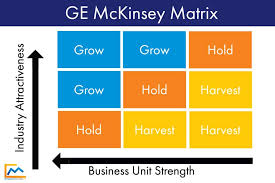
The GE/McKinsey matrix is a classic strategy framework … gone bad. Initially thought to be a radical innovation, it guided flawed corporate diversification strategies of the 1980s. Indeed, it is still sometimes taught in business schools, and some consultants still sell this analysis as a service. My first intuition is to ignore it in class. Indeed, I’ve not discussed this framework in class since posting a collection of exercises from the late 1990s here where the data reflected the Sears Financial Network.
However, showing the framework’s flaws can help students to see what they should be looking for when analyzing diversification strategies. Brian Silverman suggested that we update the exercise so students would evaluate a disguised version of Disney’s portfolio using the tool. Without context, the studio and video game divisions appear to be “dogs” to be divested, and the theme parks seem to be stars. The relationship between the units is opaque. Once the company and divisions are revealed, it becomes apparent that the links between businesses are absolutely critical. Of course, the theme parks are especially valuable because they can leverage creative output from the studios.
Since my class is partially online, I created this Google sheet to facilitate the exercise that will accommodate up to 12 student teams. It would also prove useful in a large in-person class. Here’s how it works:
- Students navigate to the sheet with their team number.
- They use the information in the table to rate each of the 6 business units on industry attractiveness and competitive position.
- This is summarized on the overview page. Scroll down to the chart, which shows the businesses graphed on the two dimensions. The instructor leads discussion about the implications and process.
- Show Disney: The instructor then changes the value in cell “B31” away from “1” which displays Disney and the names the business units.
- Useful Modifications: 1) Some teams can be asked to assess the businesses from the perspective of a specific division (bringing in the politics of resource allocation); 2) The weights on the individual items are fixed, but teams could propose different weights, injecting more judgment (and politics) into the decision process.
Contributed by Russ Coff and Brian Silverman
 Carpenter Strategy Toolbox