 Amazon is encouraging employee spinouts. They are offering employees $10,000 plus 3 months salary to quit and form entrepreneurial ventures in their Delivery Service Partner Program. This makes for an excellent “ripped from the headlines” case. I ask students to read a brief packet of news articles on the program and complete a poll before class (here is the poll I used). Since the program started, Amazon has shifted 30-50% of its delivery needs away from big vendors (USPS, UPS, FedEx, etc.) in favor of internal and small external service providers. It brings out multiple strategic issues and can be used to frame a semesters worth of strategy issues:
- Market structure: How does this alter the market structure for Amazon? On the other side, what is the market structure that employee entrepreneurs face?
- Competitive dynamics: How will players respond? (FedEx has now declined to serve Amazon)
- Internal analysis: How might this move enhance Amazon’s competitive advantage? Do the entrepreneurial ventures enjoy any competitive advantages?
- Entrepreneurship: Is the opportunity for employee entrepreneurs attractive?
- Corporate: Should Amazon vertically integrate into the delivery business? How does their tapered integration affect the market?
- Alliances: How do the collaborative relationships between Amazon and its partners differ between big and small partners?
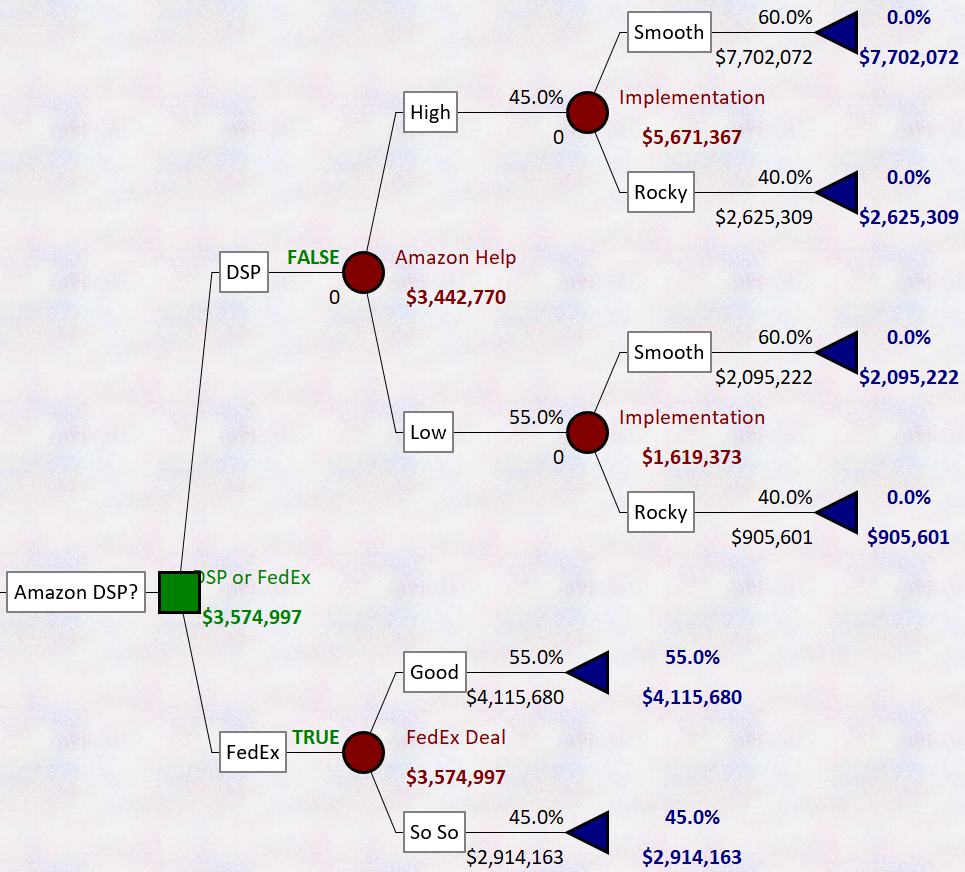
I have created a student spreadsheet that allows students to analyze the proposal from the perspective of an employee. It helps them consider two key sources of uncertainty: 1) how much help will Amazon provide on an ongoing basis? and 2) how smoothly will their implementation go? This is then compared against buying a FedEx route since there is an active market for these businesses. This is shown in the decision tree above. In addition, this is a final spreadsheet with the scenarios and decision tree completed.
Contributed by Russ Coff

 Carpenter Strategy Toolbox