
The $104B merger between AB InBev and SABMiller makes a great holiday addition to your classroom.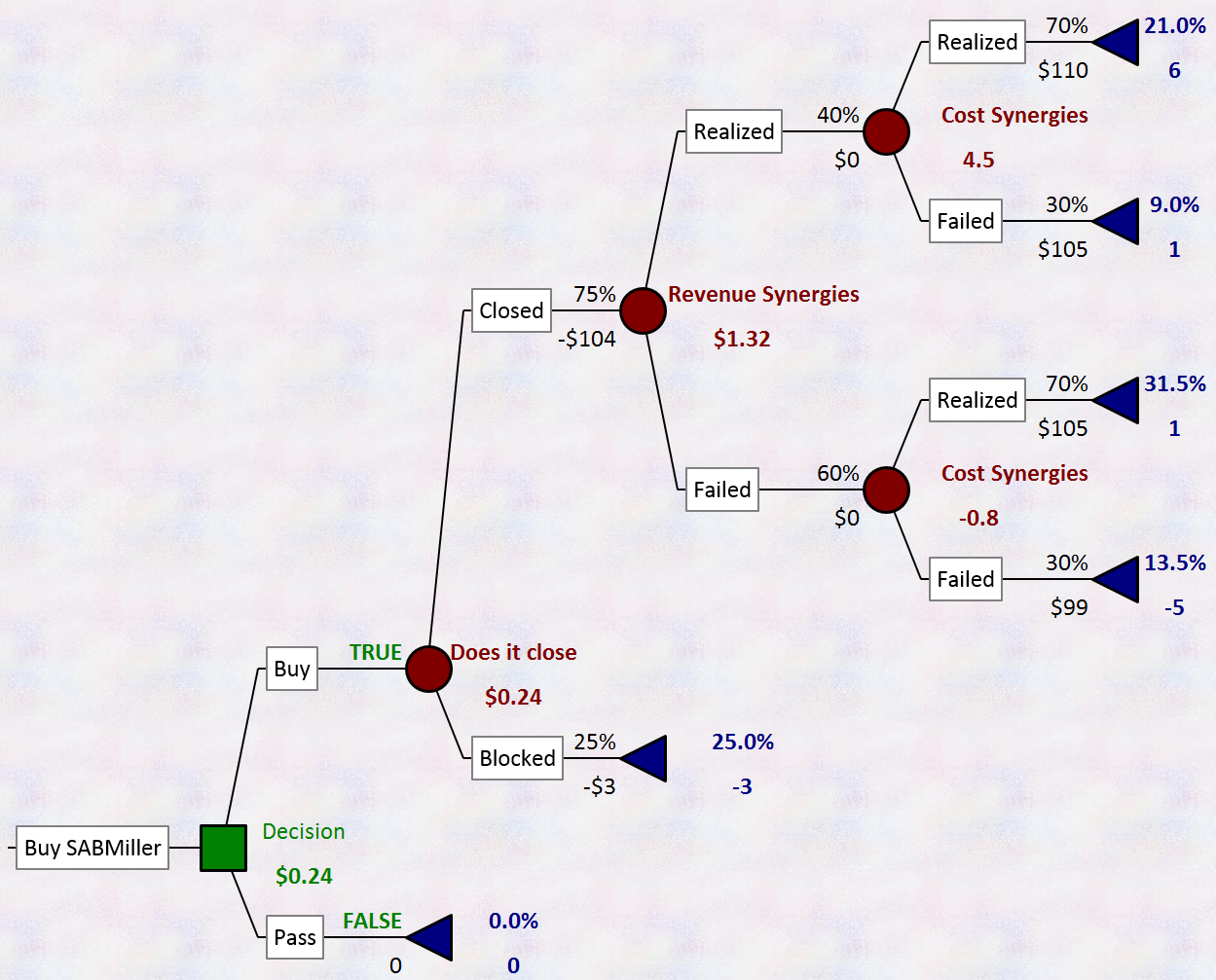 While it is largely a corporate strategy question, I used this discussion to kick off my course and I plan to come back to it as we hit various topics. Here is a packet of news articles that I used as the basis of the case. I also had students complete a brief online poll in advance of the class. This allowed me to start by summarizing their positions and to call on people who I knew had relatively unusual opinions. I used the case to show them how to draw a decision tree (click the image to enlarge) reflecting the uncertainty associated with the acquisition. Of course, it also frames topics throughout the course. Here are a few examples:
- Internal capabilities. AB InBev’s capability to conduct acquisitions and to cut costs.
- External analysis. Market structure for beer in different countries (namely Africa and China which drive this deal). Also, we compared the market structure for micro- and macro-brews. Of course, these mega-brews act to control distribution channels so barriers to entry are a key part of the game.
- Competitive dynamics. Of course this is a game among the rivals but it also includes adjacent industries (like spirits).
- Corporate. What are the logics for value creation? For example, to what extent does scale lower manufacturing costs as opposed to purchasing power or other mechanisms. At what point is a larger scale no longer an advantage?
- Strategic factor markets: The M&A context makes it clear that most of the synergies go to the target (especially at the 50% bid premium).
- Global. As indicated above, this is mostly about entry into new markets (China and Africa, among others).

Contributed by Russ Coff
 The near field communications (NFC) technologies that they rely on require that merchants invest in new technology at the point of sale. Samsung has acquired
  The Lion King brought in over 2 billion and the box office was just a small part (see the
  The one-atom thick sheets of carbon may one day replace silicon wafers and revolutionize computing and electronics. For example, recent findings suggest that
 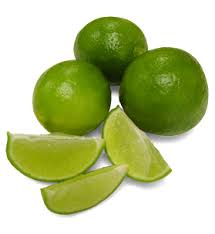 The current violence in Mexico (Political factor), rains when the trees were blooming and pests (environment) have resulted in poor harvests. The problem is compounded because of the increase in demand from Hispanics in the US, and the growing popularity of Mexican food around the world (social factors). The Florida plantations that used to be the main source of key limes were all but wiped out by hurricane Andrew and citrus canker (environment). Production moved to Mexico because of the weather, but also because legal factors (NAFTA) make it cheaper to import the limes from Mexico than from anywhere else. This explains why lately waiters have been asking if I want lemons or limes with my half and half tea…
![electriccarconcept[1]](https://carpenterstrategytoolbox.com/wp-content/uploads/2013/04/electriccarconcept1.jpg)
 Carpenter Strategy Toolbox