
Andrew Shipilov offers a nice case (with video) of Louis Vuitton’s strategy for vertical integration and alliances. He documents how Vuitton vertically integrated into distribution when the rest of the fashion industry relied only on partnerships. This allowed them to gain access to important market information (customer preferences) on a more timely basis — a source of advantage in the industry. Shipilov notes: “The more unique your assets are and the greater the control you need to exercise over the value chain to extract competitive advantage from these assets, the more vertical integration makes sense. However, the higher the uncertainty and complexity in your markets, the more you should think about partnerships.”
Contributed by Andrew Shipilov

 Monster, a father and son business (Noel and Kevin Lee) came up with the technology but was severely out negotiated by ts more experienced partner. A great cautionary tale for the study of alliances. I use the
 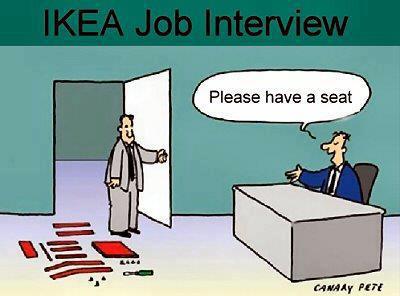 This is especially revealing given self reports of 4 to 5 minutes per resume. Online profiles get about the same amount of scrutiny with almost 20% of the time spent on the picture — of course this has the potential to introduce significant bias. The other few seconds is spent scanning the current and prior work experience, dates, and education. They do report that well-organized resumes, with clear headers marking the critical information, are rated significantly better. So you teach a strategy class, why should you care? First of all, this is an insight into how imperfect strategic factor markets actually are. In this context, you might ask, how can a firm gain an advantage in hiring talent. A key reason to use this example is that your students will tend to care about the job market and this will instantly get their attention. You could couple this with an exercise where teams of students rank a stack of resumes to identify candidates who might have critical capabilities for a company you are doing a case on (could work with any case where human capital is critical).
 The one-atom thick sheets of carbon may one day replace silicon wafers and revolutionize computing and electronics. For example, recent findings suggest that
 Carpenter Strategy Toolbox