6 Seconds to Make an Impression

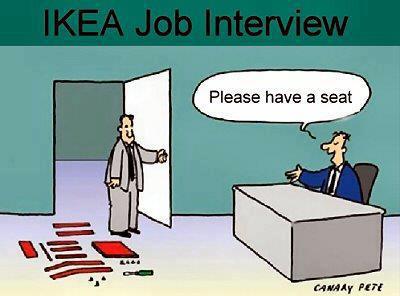
A recent study found that recruiters look at each resume for an average of 6 seconds (using eye tracking software). This is especially revealing given self reports of 4 to 5 minutes per resume. Online profiles get about the same amount of scrutiny with almost 20% of the time spent on the picture — of course this has the potential to introduce significant bias. The other few seconds is spent scanning the current and prior work experience, dates, and education. They do report that well-organized resumes, with clear headers marking the critical information, are rated significantly better. So you teach a strategy class, why should you care? First of all, this is an insight into how imperfect strategic factor markets actually are. In this context, you might ask, how can a firm gain an advantage in hiring talent. A key reason to use this example is that your students will tend to care about the job market and this will instantly get their attention. You could couple this with an exercise where teams of students rank a stack of resumes to identify candidates who might have critical capabilities for a company you are doing a case on (could work with any case where human capital is critical).
Contributed by Russ Coff

Special Orders Outsourced at BK

This funny video depicts the movement from poorly trained and low paid local workers to outsourced workers overseas and finally to flawed voice recognition software. The result is equally frustrating for the customer. Ultimately, this touches on a variety of subjects including human capital, global strategy, outsourcing, and technology strategy. One important caution is that the video reinforces stereotypes. This too should probably be a part of the conversation.

Contributed by Russ Coff

Failure to Pivot: Stroke of bad luck?

Of course entrepreneurs need to anticipate when to pivot off of their initial plans (same applies to larger firms but it’s harder). This silly video drives home the need to pivot lest you run up against a wall. You might then follow up with some examples of first movers who had the business model almost right but failed to pivot (firms like MySpace, LinkedIn, AOL, Yahoo).

Contributed by Russ Coff

Taking Strategic Risk for a Spin

Individuals and firms have different tolerances for risk. This video certainly captures fearlessness (and maybe stupidity). This might lead to a nice discussion on how such different attitudes might affect competition (for example between small and large firms). It also might seed a discussion of how decisions are made or human capital.

Contributed by Russ Coff

Does Team Production Bug You?

Specialization, team production, and cooperation are all important topics in strategy. These bugs do it all. Acquisition of valuable resources is critical as well. Here, the resource is stolen – Maybe there’s an ethics discussion in there too…

Contributed by Russ Coff

An Engineer in a Meeting…

This clip illustrates how an engineer perceives the product specifications as communicated by marketing professionals. As silly as it is, the underlying language problems are very real and are at the root of many failures to coordinate in organizations. Indeed, the firm that is able to do this effectively and consistently may enjoy an advantage in the marketplace. The video is a bit longer than I would use in class (especially given how silly it is) but might be good as an electronic resource outside of class. If you are looking for an exercise that emphasizes coordination across units, you might check out the MicroDesign negotiation.

Contributed by Russ Coff

Google/Apple vs. Their Employees?

Google and Apple must pay a total of $324 Million to current and former employees in a class action lawsuit that they lost. This highlights the multiple arenas on which competition and cooperation play out. Is it surprising that strategic alliance partners might agree not to actively poach employees from each other? Such trust seems like a prerequisite to a productive alliance. And yet, fierce competition in product and intellectual property markets makes it hard to imagine close coordination to collude in strategic factor (human capital) markets. This brings together a nice discussion at the intersection of factor markets, alliances, diversification, game theory, and rent appropriation. The video below gives an idea what Google employees do all day…

Contributed by Russ Coff and Aya Chacar

The Bear Necessities…

There are several nice Samsung cases that describe how the company has tried to merge Western practices (and managers) with Korean/Japanese practices (and managers), to become the truly global firm. It leads to a nice discussion of how a firm can transcend national identity and become a global player. The advertisement below exemplifies this: 1. Bears aren’t identified with a single region (a global species), and probably considered “cute” just about everywhere; 2. The advertisement is easily dubbed in any language as you never see the people talking; and 3. The creative/fun aspect of the ad is probably not what students think of when they think about Samsung tech products — it exemplifies that Samsung has achieved a sophisticated level of global infotainment expertise. Or has a great ad agency. Or you could just do something simpler by using it in an intro about how diversified Samsung is. (e.g., “What industries do you think Samsung is in?” (put answers on board) If someone gets to washing/drying machines, pause for a moment, smile, run the ad. If no one gets to washing/drying machines, pause, smile, ask “What about major appliances?” and run the ad. Fun fun fun.

If you have other ideas for how to use this, please post them as comments below.

Contributed by Melissa Schilling

Graphene with a Kitchen Blender?

Can a simple “kitchen blender” method of making graphene shake up the electronics industry? The one-atom thick sheets of carbon may one day replace silicon wafers and revolutionize computing and electronics. For example, recent findings suggest that electricity can be generated by running salt water over graphene. Samsung may soon use graphene to make ultra thin hard cases for it’s phones. A fun thought experiment in class might be to develop scenarios for how this disruptive innovation might alter the dynamics of the industry (and adjacent industries).

Contributed by Russ Coff

Let Your Emotions Go, Deer

Strategy is a cold calculating science, right? And yet emotion may be the key to value creation on so many levels. Recent research by Quy Huy (among others) expands on this. However, this is still only scratching the surface. How far might we take this in the classroom to balance the more analytical frameworks we regularly trod out? How might it relate to differentiation advantages? Human capital as a resource? The strategy process? Governance? In fact, it may add an important dimension to almost any topic we cover in class.

And here is another video along the same lines: Continue reading

Human Capital: Spinning to the top

While it is clear that human capital may be a source of competitive advantage, most of our discussion still centers around pay as a critical motivator. As important as that is, advertisers have long ago discovered that people have complex motivations that go well beyond pay (see the video below among others). How can firms take advantage of this to gain access to VRIN human capital? This topic has been explored more fully in my paper with Ben Campbell and Dave Kryscynski (Rethinking Sustained Competitive Advantage from Human Capital).

Contributed by Russ Coff

Coopetition: Shaping up your strategy

This exercise is a simplified version of the Global Alliance Game. That is, there are resource complementarities created among teams. However, this one emphasizes (to a greater extent) that the teams are in direct competition to complete the same tasks. As such, it is a nice exercise to explore coopetition and alliances with competitors. Introduce the exercise as an experience with the use of resources needed to accomplish a task that have been distributed unequally. Form the groups. Groups should be placed far enough away from each other so that their negotiation positions are not compromised by casual observation. Distribute an envelope of materials and a copy of the accompanying task sheet to each group. Explain that each group has different materials, but must complete the same tasks. Explain that groups may negotiate for the use of materials and tools with other teams. The first group to finish all the tasks is the winner. Give the signal to begin. When the groups have finished, declare the winner. Then conduct a discussion on using resources, sharing, negotiating, competing and using power.

Group Materials (Groups may negotiate with each other for the use of needed materials and tools on any mutually agreeable basis):

Nobody Knows the Bubbles I’ve Seen

We tend to focus heavily on the value of capabilities in strategy. However, the very features that drive willingness to pay (and thus competitive advantage) may ultimately turn out to be a disadvantage. In other words, a core competence can become a core rigidity. When rivals use this against a firm, this might be thought of as a form of “judo strategy.” Below, the animated scrubbing bubbles, the rival’s differentiator, is reframed as “lewd” residue.

Contributed by Russ Coff

When Rivals Eat Your Lunch

How do firms gain access to valuable resources and capabilities? Barney’s original discussion of strategic factor market theory focused on superior expectations or luck as drivers. This lunchables commercial illustrates how difficult that can be if the value of an asset is widely known. In class, it may lead to a nice discussion of when the value of a resource might not be known.

Contributed by Russ Coff

The Key Lime Market Sours

This NYT article about the scarcity of key limes, and the concurrent price increase, is perfect for a PESTEL analysis. The current violence in Mexico (Political factor), rains when the trees were blooming and pests (environment) have resulted in poor harvests. The problem is compounded because of the increase in demand from Hispanics in the US, and the growing popularity of Mexican food around the world (social factors). The Florida plantations that used to be the main source of key limes were all but wiped out by hurricane Andrew and citrus canker (environment). Production moved to Mexico because of the weather, but also because legal factors (NAFTA) make it cheaper to import the limes from Mexico than from anywhere else. This explains why lately waiters have been asking if I want lemons or limes with my half and half tea…

Contributed by Susana Velez-Castrillon

Softer Side of Sears: Its stock price…

Hoping to unlock value, Sears has spun off its Lands’ End unit. Unfortunately, both the new unit and Sears’ parent company stock have dropped on the first day of trading. When do spin outs create value? When do related diversified firms create value? Here, the units are quite closely related and still the company could not create value together. For some recent studies of market reactions to spinouts, see Emilie Feldman’s work. The Sears commercial below foreshadows their need for better vision. This might also go nicely with the business combination scavenger hunt.

Contributed by Russ Coff


Putin Game Theory in it’s Place

A recent Slate article notes that Vladimir Putin may be trying to create the impression that he is crazythat it may all be part of a game theoretic ploy. This seems like a great opportunity to discuss game theory on a much larger stage. The article notes, “Consider strategic theorist Thomas Schelling’s concept of the “rationality of irrationality.” This can be illustrated through the game of chicken, in which two drivers are heading for each other at full speed, and the first to swerve is the chicken. A driver who appears crazy enough to prefer dying over chickening out will always have the advantage. It is therefore rational for a player to convince his opponent that he is actually irrational.” Game theory can seem inaccessible when it is only presented using abstract examples (though Dilbert can help there), this offers a concrete example that may bring it to life for the students.

Contributed by (“heard through”) Nicolai Foss

An Agent Who Lacks Principles…

Often times students become quite disinterested when the topic of agency theory comes up, and they may not completely understand its implications. This short video does a nice job of presenting it in an interesting way in which the students can identify. The context is the relationship between a manager and his assistant, but the discussion can easily be extended to CEOs and the board of directors. Here is another video along similar lines.

Contributed by Tim Folta

Taking Customer Loyalty Too Far?

Of course, we explore customer loyalty as a key element of differentiation. How far does loyalty go? This ONN story about Southwest airlines pushes that envelope by asking what customers will do for employees (like lying to the CEO’s wife about where he is). Of course, it’s a bit silly but there’s something useful in there too 😉

Contributed by Russ Coff

Rival Analysis: A whale of a problem

Sometimes firms think they are the “hunter” only to find that their rivals are stronger than they thought. Firms may find that they are the prey rather than the hunter. After an especially cold winter, this video may help to drive home that point. In the context of judo strategy, it demonstrates the value of going undetected until you are stronger than rivals expect. Finally, the video is valuable to illustrate the general issue of managing under uncertainty.

Contributed by Russ Coff