Gautam Ahuja won the 2016 BPS Irwin Outstanding Educator award. It became clear from student testimonials that the capstone ethics lecture was not just memorable, it was an emotional peak that few students (or teachers) ever reach.  What follows is a brief description/outline of the lecture. While it certainly won’t do it justice, it may offer some important ideas for instructors to explore.
I have them debate an actual decision (that varies from year to year). Essentially, I pick some current significant and controversial business decision or event that is legal and ideally, morally ambiguous, or even amoral (not immoral), at least apriori, and then foster a discussion on its pros and cons. This reveals much deeper fundamental issues. To illustrate I have used the following in different years:
- The decision by banks to award bonuses to traders for being on the “correct” side of the financial crisis deals in the years following the Lehman collapse
- The decision by a chemical company to use local safety standards in its different markets, which is completely legal,
- The decision to sell skin whitening creams in countries in India by large multinational companies,
- Provision of significantly discounted or couponed milk products for newborns,
- The federal reserves decision to keep interest rates low for the last x years
and so on…
I then try and get them to debate this and, almost invariably, there emerge two sides to the issue. However what is interesting is that three other factors usually emerge: A) the problem is much deeper and more morally ambiguous than you thought, B) reflexive reversion to standard MBA, theories frameworks and concepts often leads to very flawed decisions ( in a good session an amazing large number of people change their initial decision), and C) In fact using the framework is itself part of the problem. Continue reading →

 This is another in our series of explorations in learning from failure (and learning from success). The Swedish Museum of Failures reminds us of some of the most spectacular product failures. Interestingly, most of them can be closely linked to some spectacular product successes. A complete failure may be a near miss. Perhaps a slight pivot away from extreme success. This video offers a window into some of the more interesting exhibits in the museum. One might ask students to review the video and imagine how a well-placed pivot might have helped each failure turn the corner. This might also fit with some of the toolbox posts on pivoting.
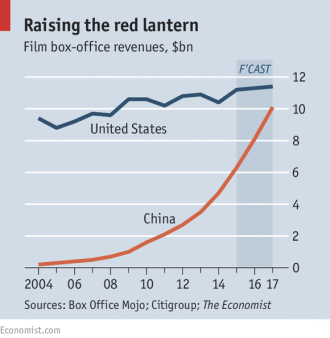 How do firms modify their products so they will be well-received in the most promising global markets? Case in point:
 The
The  Are there cultural norms for telling the truth?
  Most of the media has chalked up President Elect Trump’s phone call with Taiwan’s President, Tsai Ing-wen, as driven by
 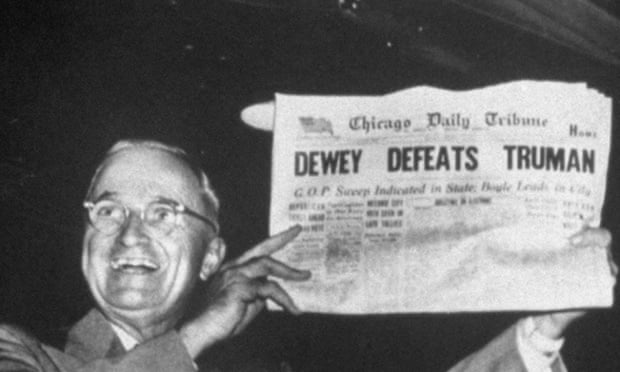 This isn’t the first time polls have been wrong. The election of Donald Trump was a shock to many college students (as well as the press) and this may warrant some class time. Some instructors responded by
  Why isn’t the BCG matrix dead as a framework? I still consistently find that my students have been exposed to it (generally in Marketing). They don’t even understand that it is a framework for internal capital markets (where firms add value by serving as a source of funding) or that it is hopelessly flawed. It’s a dog, divest right away. If the sale generates cash, funnel it to any other management framework (even SWOT) and I’m sure it will create value.
 The augmented reality (AR) game,
  Successful strategy is often a combination of luck firm specific skills and favorable conditions. AmorePacfic makes a great ripped-from-the-headlines case since it rose to be the #1 South Korean firm buoyed by a growing and large domestic demand from a growing population. Hallyu – the Korean equivalent of Hollywood was also a driving factor as South Koreans want to look like their favorite stars and use the same cosmetic products and that includes men. In fact, it is estimated that a whopping 20% of South Korean men use cosmetic products on a regular basis. AmorPacific capitalized on this growing trend by building up its brand and investing in R&D and ultimately riding the popularity of K-pop and K-movies to expand internationally. At a time that demand is softening, K-cosmetics are still growing with exports increasingly exceeding imports and Korean cosmetics brands now more popular than European brands in China and increasing their penetration in many countries including China, Hong Kong, Japan, the US, Vietnam, and in a surprising list of other countries such as Poland where their addition to Sephora’s product line and other large retailers will ensure broad distribution. How has a $150 1.7 oz managed to gain global popularity? Some materials for the case might include:
 Aldi has been crushing the competition for years and makes an excellent case of how organizational alignment can deliver a strategic advantage (cost in this case).
 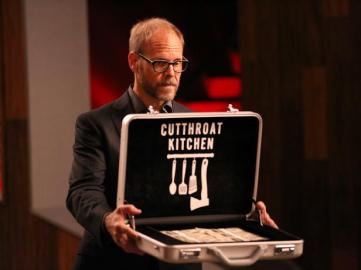 This cooking competition show begins with an auction of resources needed to cook including space to work and cooking utensils. The contestants bid to preempt rivals by obtaining access to key resources while saddling them with inferior resources. This is ultimately quite similar to the
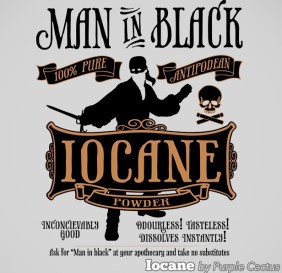 Most students quickly grasp the concept of game theory–figuring out what your opponent is likely to do helps you decide what you ought to do. As this clip shows, however, failing to understand the real decision choices to be made can lead to deadly, but funny results. In class, after introducing simultaneous vs. sequential games, I show the clip, pausing it just before the 2:11 mark. At this point the poison is in the goblet, and I ask the students who haven’t seen the movie which goblet they think is poisoned. I record answers, and then show the clip (up to anywhere between 4:45 and 5:02). I then ask if they were surprised. I then show the remainder of the clip, and we discuss what mistake Vazinni made. Students see the real payoff matrix as: a) if I (Vazinni) guess wrong, I’m dead; b) If I guess right, then the Dread Pirate Roberts knows it too has incentive to kill me before he dies. I only live if Iocane powder kills instantly. My correct answer can only be not to drink either goblet if I want to live. After watching this video clip and class discussion, students can:
 Managing change is given little time in most strategy courses. We often understate how difficult strategic change actually is and then wonder why organizations struggle so much with implementation (and our students think its all common sense). You can think of it as walking blindfolded on a tightrope between two solid foundations. During the transition, there is great uncertainty about whether the desired path is attainable. This, of course, is another way of looking at Lewin’s unfreeze/change/refreeze model. This video can help to illustrate the issue:
 Carpenter Strategy Toolbox