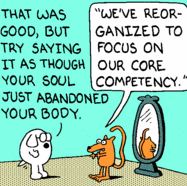
 The term “core competence” has taken hold in the business world. Not many academic terms break through to common usage so this might be viewed as a tremendous success. Unfortunately, it isn’t clear that it is particularly useful with the modified practitioner definition. As it is commonly used, it seems to mean “stuff the firm is pretty good at.” Unlike Prahalad and Hamel’s original article, common usage does not suggest that these capabilities: necessarily confer value in the eyes of customers over what rivals can produce, are hard to imitate, or that they are especially relevant in a corporate (multi-business) context.
Stripped of these defining characteristics, is the term useful?
As it is commonly used, the term can help firms distinguish what they are relatively good at from things that they are not. This is akin to a simple business unit-level internal analysis that identifies strengths and weaknesses. While it is important for firms to be aware of their strengths and weaknesses, by not comparing the strengths to rivals, we cannot infer whether the firm has a competitive advantage or how long such an advantage might last. It could even reflect a competitive disadvantage if rivals are superior in those areas. As a mode of internal analysis, the common usage doesn’t really go beyond SWOT analysis, which itself is woefully inadequate as a form of analysis.
When practitioners use the term core competence, it is often preceded by the words “stick to your…” That is, the firm should understand what they are good at and avoid straying from strengths. Of course, acquiring a new competence should be an important strategic decision – not to be taken lightly. However, the traditional advice seems to miss the mark if it implies that firms should avoid such decisions altogether. Classic examples of railroads, radio broadcasting, or, more recently, Toys ‘R’ Us illustrate how sticking to one’s knitting is not always the best strategy.
In short, as an internal analysis tool, the common usage of the term core competence does not add much value – certainly not relative to other internal analysis tools like value chain and VRIO analysis.
How do multi-business firms create value? Continue reading →

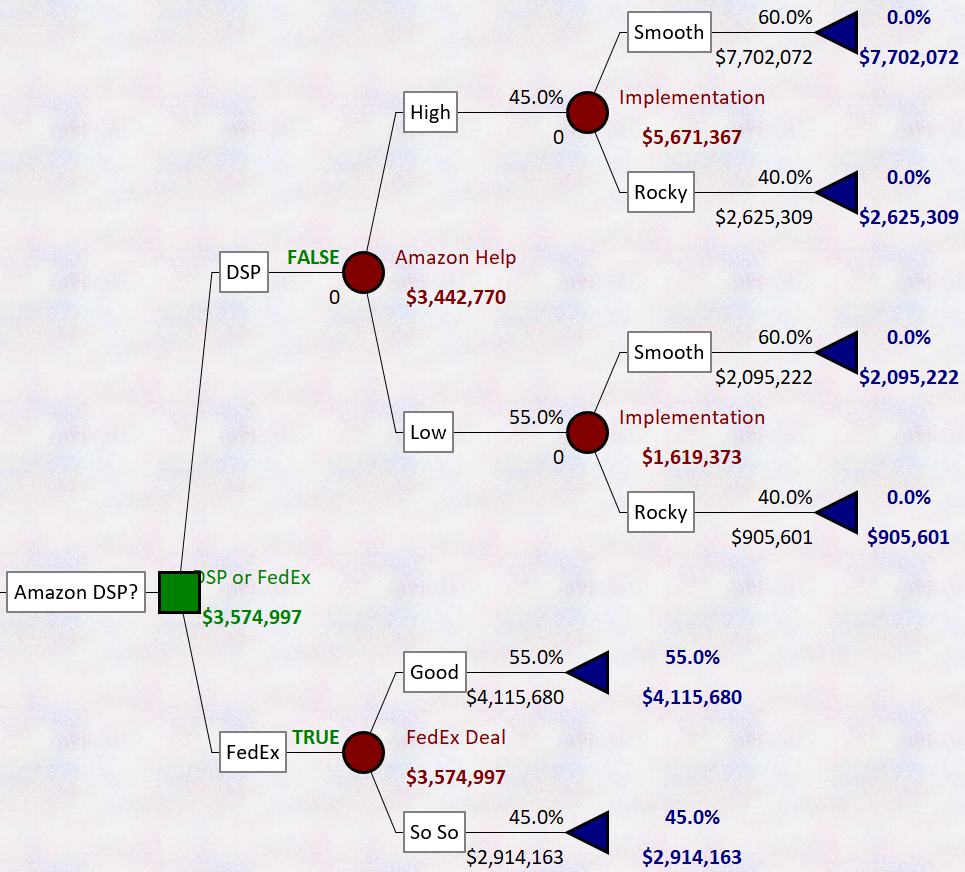 Amazon is encouraging employee spinouts. They are offering employees $10,000 plus 3 months salary to quit and form entrepreneurial ventures in their
  Team projects are quite common in strategy classes. While the topic of team effectiveness is usually more central for organizational behavior courses, it is essential for organizational effectiveness … and team projects. While you may not want to allocate a lot of time and resources to the topic, you may want to get teams off to a good start so you don’t have to address dysfunctions later in the semester. One reason things may go south is the team’s desire for a “fast and enthusiastic start.” A bias for action can sometimes sabotage collaborative efforts. That well-meaning call to action — “let’s get this done!” – can result in a “sloppy start.”
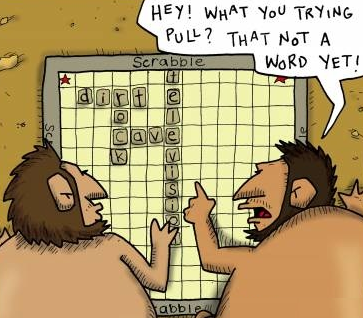 The Alphabet Soup
 As Netflix’s strategy unfolds it becomes clearer the extent to which it threatens traditional media companies. Initially, Netflix was a welcome partner who paid for access to older entertainment assets – new income streams for studios. More recently they have developed new content and lure top talent away from traditional media companies. Now, by offering a compelling portfolio of options, they compete more directly against traditional media companies. AT&T, Comcast, Fox, and Disney have taken notice of Netflix’s increasingly vertically integrated business model that bypasses traditional distributors (cable, DSL, satellite) and doesn’t rely on advertising revenue.
  Class participation is typically a major component of grades in strategy courses. Some students are quite comfortable participating. Others not so much. This video from
  Strategy classes often give short shrift to managing change but this is where the rubber hits the road.
  Some fear that eventually and robots will be
  Generic strategies are easy enough to explain and students typically feel that they understand. But do they really? Could they develop and implement a sound strategy? Sometimes it’s worth a bit of additional hands-on experience to make sure the lessons stick. Probably the most important message is alignment — the need to design the organization and product to fit the strategy. In other words, to make the appropriate tradeoffs.
  Entrepreneurship students often think they’ve found a “no brainer” idea – one that everyone “obviously” will want. We’ve all seen it before – an idea that is so good that it requires zero dollars for customer acquisition because word of mouth and social media will lead to infinite sales, virtually overnight.
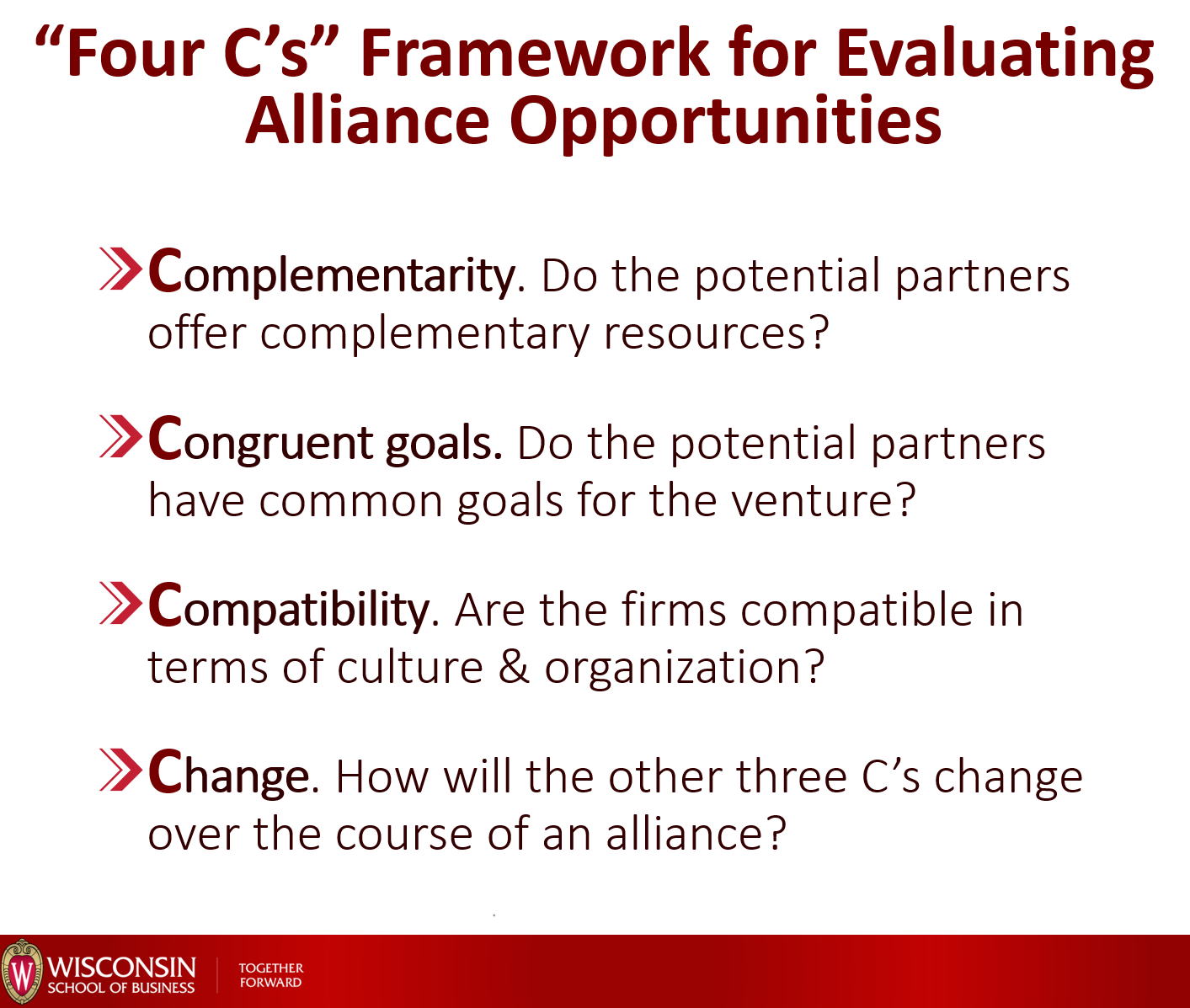 Strategic Alliances don’t make the news the way M&A do so some may struggle for examples. It is especially helpful to make students aware that, while Alliances may be less risky than M&A, there are still risks that need to be analyzed. Tom Petty provided a useful example to apply the

 It’s been a red letter week in terms of the
  When leading a case discussion, wouldn’t it be nice to know exactly what positions students were prepared to defend? You want to bring people into the conversation who you know will have diverse perspectives to bring about a balanced discussion.
  A related innovation is tents that display the letters A through D. This can be used for cases that offer up to 5 alternatives that students might vote for (a,b,c,d, and no tent).
  With its $13.7B bid, Amazon agreed to pay a 27% premium over Whole Foods’ previous market valuation. This makes for a nice live case case in your strategy classroom. Was this a sound business decision? The market rewarded Amazon with an increase in its stock price. While some opportunities are apparent, it remains unclear exactly how Whole Foods will be worth 27% more to Amazon (and that’s just to break even). A five forces analysis will reveal that the grocery market is highly competitive with exceptionally thin margins — not an especially attractive industry to enter. So how can they win in this game? There are many possibilities that may come up in a discussion. For example, Amazon may:
 Strategies rarely work out as planned but somehow, students remain eternally hopeful that everything will go exactly as they expect. This experiential exercise allows students to “feel”
  Inflate ball & sit on it. Ask 2 volunteers to inflate a heavy duty inflatable ball using a small air pump (one can buy these a sport store) and try to sit on it afterwards for a minute. While introducing the exercise, the instructor should keep the plug hidden in her/his pocket. Inflating the ball is amusing (both the volunteers and the audience). It is not easy or quick to inflate the ball.
 takes the plug out admitting that she/he had it all the time. The class will laugh. It may be frustrating for the volunteers but then we begin the debrief and explain the reason for the deception in the exercise.
 Carpenter Strategy Toolbox