This scene depicts a confrontation over whether or not to launch nuclear missiles. The scene illustrates a series of cognitive biases and blind spots in decision-making.
Contributed by Paul Friga

Contributed by Paul Friga
Contributed by Sharon Livesey
Contributed by Sharon Livesey
Contributed by Andrew Inkpen
 A number of excellent suggestions came out of the SMS Teaching Community session on using videos in class. Eventually, all of these will be integrated into this site. Here are a few additional video libraries you may wish to check out.
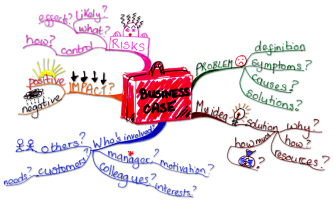 Here are some popular case repositories:
 , it has also sought to close the service gap with local rival All Nippon Airways – putting in new seats, revamping in-flight menus and installing electronic toilet seats in some business and first class cabins. That investment underscores JAL’s belief that customers will pay a premium for full-service flights.” You can also find a companion video from CNN here. This is great for an introductory class. Allows discussing all parts of a strategic audit including strategy, performance, resources, and competitive position. Also the right size to introduce case discussion for a group that has never done case analysis and discussion before. So how did Kazuo Inamori help change the culture at JAL: ‘nommunication’. “That is when he unleashed another secret weapon. I brought six cans of beer after these sessions or to people who were working late,” he says. After a beer or two, people opened up and told me their honest opinions.” (see the follow up story and video here)
Contributed by Aya Chacar
 The article describes how William Johnson was designated as CEO of Duke Energy after its acquisition of Progress Energy and how he was fired after only two hours. The original M&A agreement included a condition that stated that the CEO of the target (Progress Energy) would be named CEO of the merged company. However, he was fired two hours after the designation and the CEO of the acquirer (Duke Energy) was named CEO of the merged company. I think this article could motivate to further study this acquisition. It seems to be a novel illustration of a hostile acquisition.
Contributed by Francisco Morales
 over most brick and mortar rivals that its customers need not pay sales tax. That is now ending in some states as they agree to collect the taxes (notably California). So how are they responding? They are building more warehouses so that, in some metropolitan areas, they will eventually have same-day delivery. Ironically, with each day, they have become more of a brick and mortar operation. Still, that will give them an advantage over ecommerce rivals. It also requires substantial investments in distribution that rivals will have a hard time duplicating.
 We often spend time focused on what makes a strategy inimitable. Of course, the spate of recent law suits tells the other side of the story in terms of the risks of copying. That said, there is little new under the stars and imitation can yield tremendous returns. We don’t see much focus in cases (or the literature) on imitation as a capability. What makes firms good at it?
 Thinking that travel agents would go the way of the dinosaur, the stopped paying commissions and built their reservation web pages. However, this ultimately created powerful online reservation systems that the airlines now must pay commissions to. The article provides a road map on how NOT to use the 5 forces in developing a strategy…
 Several factors might account for high prices including:
 Here are a series of news articles that one can distribute (not all are really needed). In order to assess Google’s prospects for creating value, one must evaluate the following key sources of uncertainty:
Contributed by Aya Chacar
I developed a number (39!) of mini-cases to demonstrate a range of strategy topics. I usually use the cases and their attached questions at the beginning of a lecture or part way through to break up the pace. I find that they provide a strong, shared basis for talking about particular subjects in strategy, and can be used to promote debate and discussion. These are found in the Test Bank accompanying the Hitt, Ireland, Hoskisson Strategic Management textbook, Fifth Edition (2003).
Contributed by Mason Carpenter
At the 2003 SMS Conference, Mason Carpenter (me), Amy Hillman, W. Gerry Sanders, & Gerry Keim presented a program on challenges and opportunities of teaching extended session strategy classes. The hand-out with several of the pertinent suggestions are provided in the attached handout.
Contributed by Mason Carpenter
jibjab video on Big Box Mart. There was a 60 minute PBS Frontline program on “is Walmart good for America,” which this 3 minute video essentially summarizes.
Contributed by Mason Carpenter
Great combo of an interesting BW article on Dell’s morphing strategy and a short video that talks through some of the changes and challenges facing Dell.
http://www.businessweek.com/magazine/content/09_43/b4152036025436.htm
Contributed by Mason Carpenter
A short and good introduction of Star Alliance – The Airline Network for Earth.
Contributed by Mason Carpenter
 Carpenter Strategy Toolbox