
 The Zoom live case is provided in an earlier post. Most instructors are all or partially online now so I’m sharing some online tips for teaching the case. The key task here is to use some asynchronous learning before a synchronous session so you can hit the ground running. One really important tip: Use worksheet assignments and Google docs for group breakouts in synchronous sessions. Here’s how:
Asynchronous Zoom Assignments. I’ve created “worksheets” using essay questions in the Canvas survey/quiz tool. These questions are structured so the answers need not be long and are easy to grade. I have two worksheet assignments.
- Strategy Diamond Worksheet. I use Hambrick & Fredrickson’s strategy diamond framework to answer the question “what is strategy?” I entered the worksheet as a quiz/survey in canvas but the link is the answer key in MS Word. Specifically, the prompt is: Zoom recently entered conferencing hardware, describe the strategy using the framework (e.g., Arena, Differentiator, Staging/Pacing, Vehicles, Economic Logic). While these are short essay questions, it is easy to see if they are able to understand the framework and allows synchronous sessions to move faster.
- 5 Forces Worksheet. The 5 forces worksheet is also entered as a canvas survey. For each force, students list 3 actors ordered by their impact on industry profitability. Then they explain their ordering briefly. For buyer power: List several types of buyers in the video conferencing industry (at least 3) where each might be thought of as a market niche. Put them in order reflecting their willingness to pay (high to low). Then indicate a few factors that drive the differences in willingness to pay. Again, it is easy to grade since it is clear whether they understand from the order.
Synchronous Activities. Here, I rely on group breakouts with Google docs. Here are two such activities.
- Industry evolution. The link goes to a 5 forces worksheet for before, during and after the pandemic (3 tables in the doc). As a breakout exercise, I assigned 2 teams to each page of the worksheet and told them to start at different places in the framework. Then, after 10 minutes, I brought them to the main room, shared the Google Doc and asked the teams to describe their analysis to predict how the industry will develop (post pandemic) – rivalry, growth, willingness to pay, etc. These are used to develop assumptions in the next exercise.
- Financial Scenario Analysis. This link goes to a Google sheet with 8 Zoom financial models based on: 1) Rival product quality 2) Rival price competition, and 3) Zoom’s continued innovation/quality. Varying these 3 sources of uncertainty (H/L) generates 8 scenarios. I assigned each team to a scenario and at breakout, sent them all to the Google sheet to predict profit margins and revenue growth in that scenario. We then discussed the probabilities associated with each scenario. the bottom line was that the market capitalization was so high that selling the company should probably be considered as a very real alternative (e.g., what problem are you trying to solve?).
Contributed by Russ Coff
 I like to start the semester with a “ripped from the headlines” case. This is especially helpful if some of one’s cases are older. This semester, Zoom is a great alternative. The current
 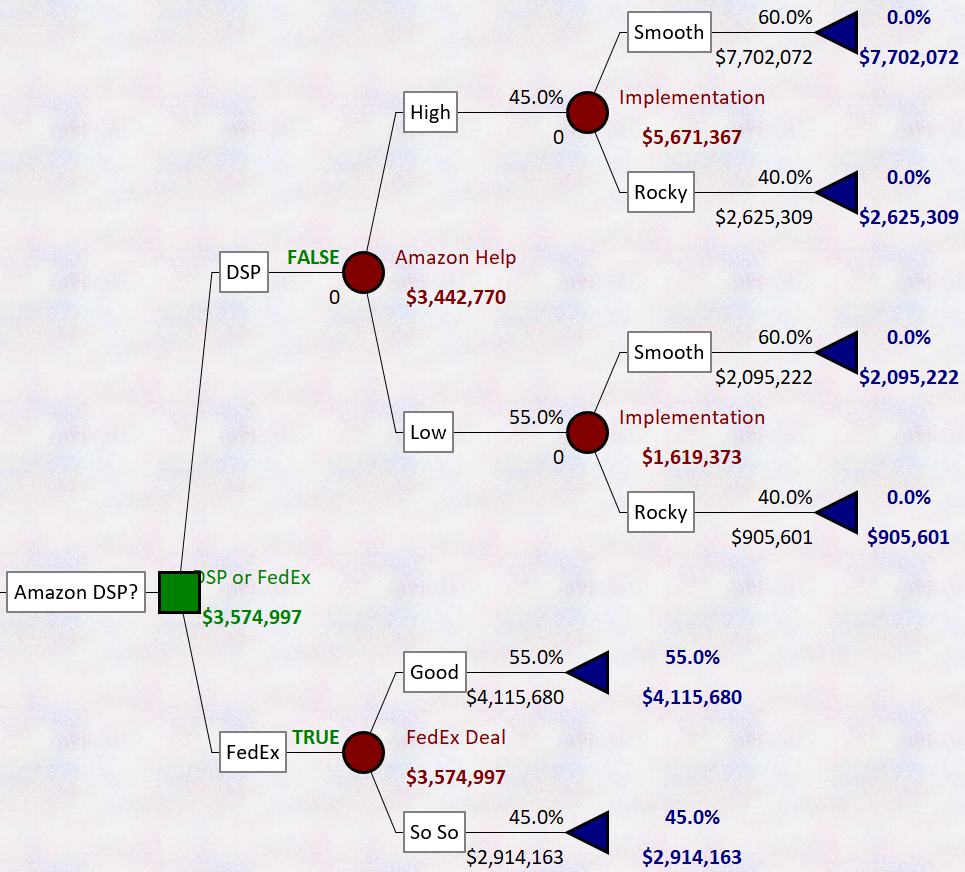 Amazon is encouraging employee spinouts. They are offering employees $10,000 plus 3 months salary to quit and form entrepreneurial ventures in their
  As Netflix’s strategy unfolds it becomes clearer the extent to which it threatens traditional media companies. Initially, Netflix was a welcome partner who paid for access to older entertainment assets – new income streams for studios. More recently they have developed new content and lure top talent away from traditional media companies. Now, by offering a compelling portfolio of options, they compete more directly against traditional media companies. AT&T, Comcast, Fox, and Disney have taken notice of Netflix’s increasingly vertically integrated business model that bypasses traditional distributors (cable, DSL, satellite) and doesn’t rely on advertising revenue.
 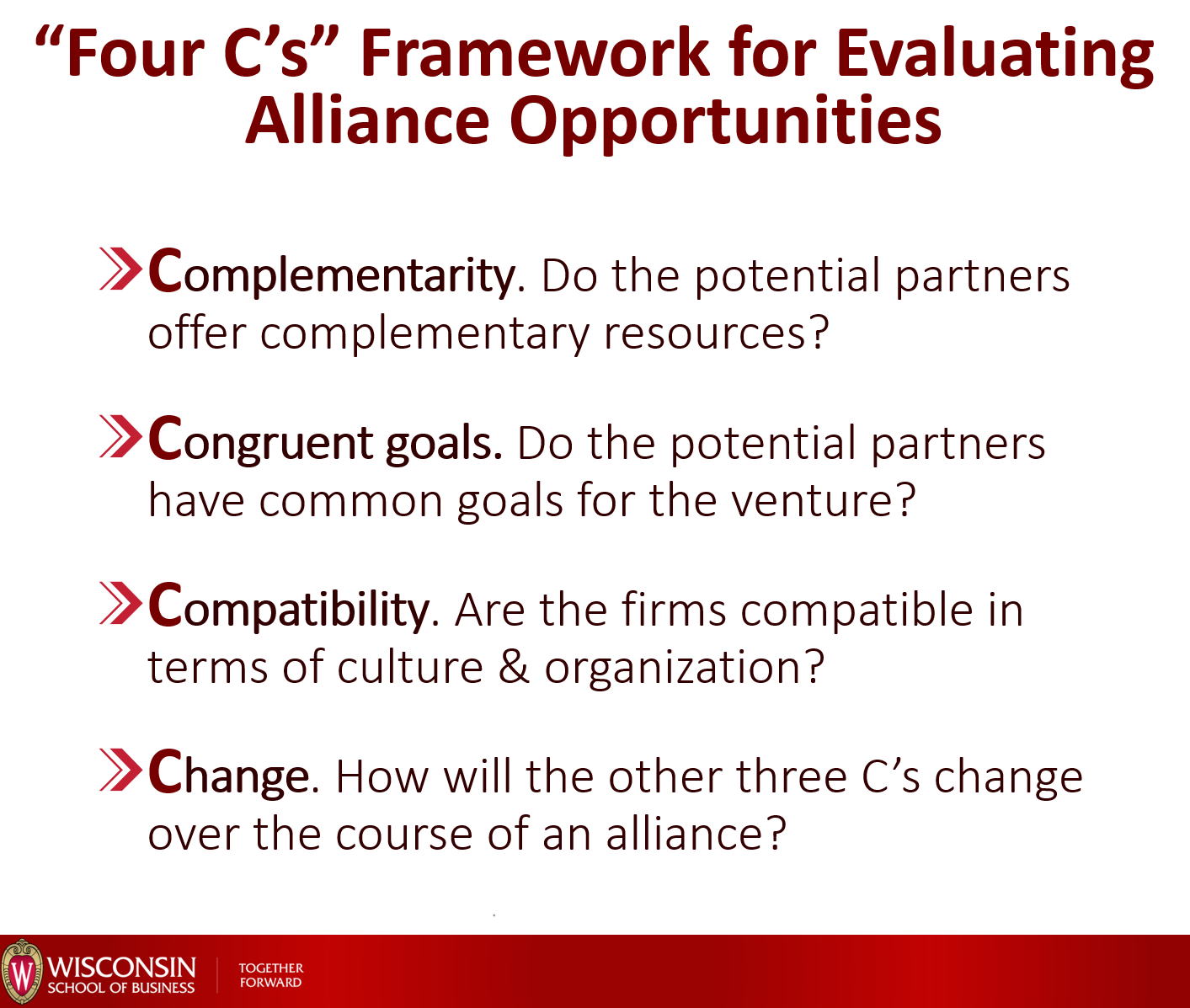 Strategic Alliances don’t make the news the way M&A do so some may struggle for examples. It is especially helpful to make students aware that, while Alliances may be less risky than M&A, there are still risks that need to be analyzed. Tom Petty provided a useful example to apply the
  It’s been a red letter week in terms of the
 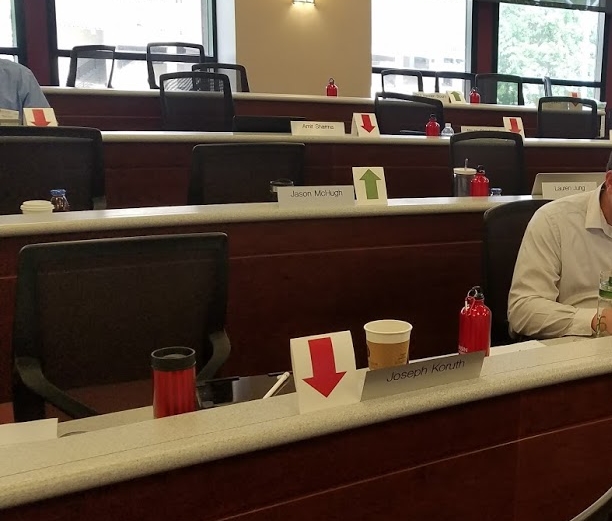 When leading a case discussion, wouldn’t it be nice to know exactly what positions students were prepared to defend? You want to bring people into the conversation who you know will have diverse perspectives to bring about a balanced discussion.
  A related innovation is tents that display the letters A through D. This can be used for cases that offer up to 5 alternatives that students might vote for (a,b,c,d, and no tent).
  With its $13.7B bid, Amazon agreed to pay a 27% premium over Whole Foods’ previous market valuation. This makes for a nice live case case in your strategy classroom. Was this a sound business decision? The market rewarded Amazon with an increase in its stock price. While some opportunities are apparent, it remains unclear exactly how Whole Foods will be worth 27% more to Amazon (and that’s just to break even). A five forces analysis will reveal that the grocery market is highly competitive with exceptionally thin margins — not an especially attractive industry to enter. So how can they win in this game? There are many possibilities that may come up in a discussion. For example, Amazon may:
 This is another in our series of explorations in
 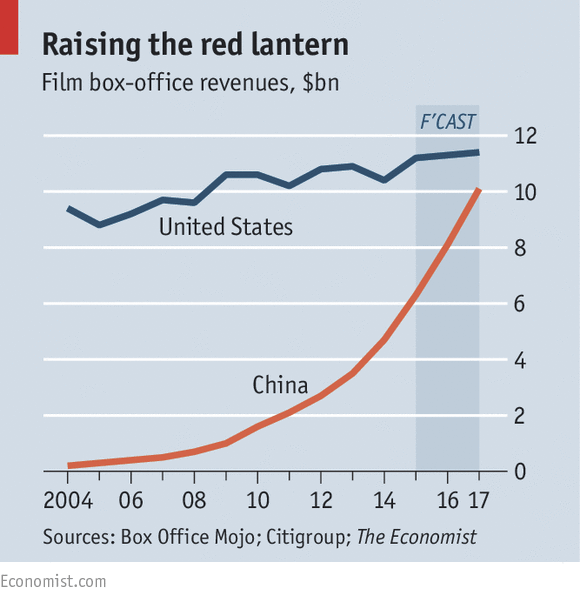 How do firms modify their products so they will be well-received in the most promising global markets? Case in point:
 The
The  The augmented reality (AR) game,
  Successful strategy is often a combination of luck firm specific skills and favorable conditions. AmorePacfic makes a great ripped-from-the-headlines case since it rose to be the #1 South Korean firm buoyed by a growing and large domestic demand from a growing population. Hallyu – the Korean equivalent of Hollywood was also a driving factor as South Koreans want to look like their favorite stars and use the same cosmetic products and that includes men. In fact, it is estimated that a whopping 20% of South Korean men use cosmetic products on a regular basis. AmorPacific capitalized on this growing trend by building up its brand and investing in R&D and ultimately riding the popularity of K-pop and K-movies to expand internationally. At a time that demand is softening, K-cosmetics are still growing with exports increasingly exceeding imports and Korean cosmetics brands now more popular than European brands in China and increasing their penetration in many countries including China, Hong Kong, Japan, the US, Vietnam, and in a surprising list of other countries such as Poland where their addition to Sephora’s product line and other large retailers will ensure broad distribution. How has a $150 1.7 oz managed to gain global popularity? Some materials for the case might include:
 Aldi has been crushing the competition for years and makes an excellent case of how organizational alignment can deliver a strategic advantage (cost in this case).
  Mattel just lost to Hasbro on producing Disney princess dolls — a $500M a year business. This brings to an end a 60+ year strategic alliance.
  hich would prefer that it be produced in the U.S. The car is produced through a joint venture with China’s largest auto maker SAIC Motor Corp. Rather than produce the car in the U.S., GM plans to import the Envision from Yantai, China, where the joint venture has produced the vehicle for about a year. Through the first 11 months of 2015 it sold 127,000 of them in China. This example brings out several key points with respect to strategic alliances. Certainly the UAW viewpoint brings in a stakeholder perspective. However, SAIC is also potentially a competitor. It’s home market has sheltered it while it gained capabilities to produce on a very large scale. Recently,
  Between the Football games, you may have seen that ESPN is losing subscribers in droves (
 Lego profits have more than doubled in the last five years. The company has sold non-core businesses and doubled down on the core building block products. They are the undisputed king of building toys. A
  Carpenter Strategy Toolbox