
Will Samsung Pay win a standards war over Apple and Google? Apple Pay and Google Pay may have gotten lots of buzz but adoption of contactless payment has been slow. The near field communications (NFC) technologies that they rely on require that merchants invest in new technology at the point of sale. Samsung has acquired LoopPay and its technology to allow phones to communicate with any magnetic strip reader. The new service is expected to launch in the 2nd half of 2015. Even if NFC is ultimately a superior technology, the ease of adoption may allow Samsung to dominate as users seek a solution that they can use with most merchants. Meanwhile, Google plans to include it’s Pay app on all Android devices which could increase its penetration. Though it is important to note that this might create a conflict with its key Android partner Samsung. This should engender a nice discussion of strategy in “winner take all” standards wars. In class, one might assign groups to debate why Google, Apple, Samsung, or other will win this market.
Contributed by Russ Coff

 However, it is certainly produced a gush of news lately as oil prices have slipped by 60% in just a few months.
  Rejection, almost inevitable, doesn’t deter them. The rest of us kill inventive ideas before we even test them because we fear rejection.
 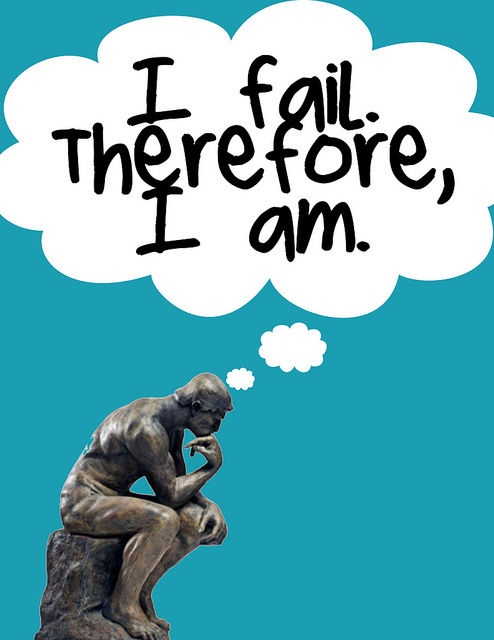 An emerging literature focuses on learning from failures — both in terms of entrepreneurship and strategy more broadly. For some recent examples, see studies by
 MicroTech is a negotiation over the terms to transfer a technology between 2 divisions of a company to take advantage of a market opportunity. Sub-optimal agreements (money left on the table) represent transaction costs and inefficiencies that must be overcome in order to create corporate value. There are two roles (Gant and Coleman). One division, Household Appliances (HA), has developed a new technology that has value if sold outside of the company. However, the division does not have a charter to sell chips. In order to take advantage, the technology must be transferred to the Chips & components (CC) division. In the process, about 20-40% of the potential value is typically left on the table. The discussion focuses on how to align objectives and achieve cooperation across divisions. It turns out that such cooperation is hard to achieve in a competitive culture. How, then, can the firm create a cooperative culture? This, it turns out, may be a VRIO resource…
 They started Justin.tv to broadcast their lives, but soon discovered that people really wanted to watch gaming.
  The “Vision Thing” exercise is designed to help students distinguish the activities of leaders and managers in a fun and engaging manner. The exercise involves creating a three-tiered hierarchical structure. One person is the CEO, another is the manager, and a third is the employee. The CEO prepares a vision statement in advance and works with the manager to determine how to translate the vision to a tangible “product” using the toy construction set. The manager then guides the employee on building the “product.” The process is iterative in nature—the manager can communicate with the CEO and employee as often as necessary. But there is a finite amount of time available to implement the vision. Once the exercise is complete the team comes together to examine how close the team came to implementing the CEO’s vision. The learning objectives are:
 especially for executive audiences. While there are large gaps in our understanding of personality and leadership, research does provide several pointers that can help assess who would be a good organizational leader in different contexts.
  s/year. A
  They have offered $600 million more for Family Dollar than the preferred suitor. Two things may be preventing Family Dollar from switching partners: 1) concerns that a Dollar General deal would be thwarted by anti-trust regulators, and 2) the Family Dollar CEO would lose his job if Dollar General takes over. Of course, they say the second issue is not on their minds. This makes a great “ripped from the headlines” case (
 Carpenter Strategy Toolbox